Small vs. Big Assisted Living: Why Intimate Settings Support Better ADLs
Business Name: BeeHive Homes of White Rock
Address: 110 Longview Dr, Los Alamos, NM 87544
Phone: (505) 591-7021
BeeHive Homes of White Rock
Beehive Homes of White Rock assisted living care is ideal for those who value their independence but require help with some of the activities of daily living. Residents enjoy 24-hour support, private bedrooms with baths, medication monitoring, home-cooked meals, housekeeping and laundry services, social activities and outings, and daily physical and mental exercise opportunities. Beehive Homes memory care services accommodates the growing number of seniors affected by memory loss and dementia. Beehive Homes offers respite (short-term) care for your loved one should the need arise. Whether help is needed after a surgery or illness, for vacation coverage, or just a break from the routine, respite care provides you peace of mind for any length of stay.
110 Longview Dr, Los Alamos, NM 87544
Business Hours
Choosing an assisted living neighborhood is rarely just a real estate choice. For most families, it is a turning point in a loved one's life, particularly around the most individual routines: getting dressed, bathing, managing medications, and merely getting from bed to chair without a fall. Those Activities of Daily Living, or ADLs, are precisely where small, intimate assisted living settings typically outshine big, campus-style communities.
I have actually explored, assessed, and assisted location seniors in both kinds of settings throughout the years. The pattern corresponds. Large buildings provide appealing facilities and busy calendars. Small homes tend to provide more reliable, more tailored aid with the fundamentals that genuinely keep someone safe and dignified. The differences are subtle on a brochure, and striking in genuine life.
This article looks carefully at why that takes place, how to choose what your loved one actually needs, and where large neighborhoods still have an edge. The objective is not to declare a universal winner, however to match environment to individual, especially around ADLs and hands-on elderly care.
What ADLs Actually Mean in Daily Life
Professionals use "ADLs" continuously, so families sometimes nod along without totally visualizing what is included. For placement decisions, it deserves decreasing and translating lingo into lived moments.
ADLs typically consist of bathing or showering, dressing, grooming, toileting, transferring (for example, bed to chair), and eating. Often strolling or using a mobility gadget is contributed to the list. On paper, it seems like a checklist. In reality, each ADL has layers.
Bathing is not just stepping into a shower. It is getting someone to agree to bathe, changing water temperature, supporting a weak knee, washing hair completely, and ensuring they are completely dried to avoid skin breakdown. If your mother has dementia and dislikes water on her face, a rushed bath can seem like an assault. A calm, familiar caregiver who knows how to talk her through it can turn a dreaded experience into a bearable routine.
Dressing can be the trigger for agitation if someone is pushed to hurry, or it can be an opportunity for discussion and orientation. Moving safely needs both adequate personnel and the right method, or the danger of falls goes up quick. Toileting help is deeply intimate and highly tied to dignity. Small breakdowns in any of these locations tend to snowball: avoided baths, poor hygiene, and an increased risk of urinary tract infections, falls, and hospitalizations.
Because ADLs are so relational, the staff-to-resident ratio, the pace of the environment, and the consistency of caretakers matter as much as any formal care plan. This is where size enters play.
How Size Shapes Care: The Structural Differences
When households compare neighborhoods, they typically look initially at rate, location, and appearance. Size lurks in the background till you link it to what the day actually appears like for a resident.
Large assisted living neighborhoods usually have lots, sometimes hundreds, of homeowners. Wings or floors may be divided by level of care, memory care, or independent living. The structure frequently feels like a hotel, with a front desk, business cooking area, and formal dining-room. Staffing is scheduled in blocks: day shift, night, overnight. Ratios can vary widely, however lots of large properties hover around one direct care employee for 8 to 15 homeowners throughout the day, with less at night.
Smaller settings can suggest different designs. Some are "residential care homes" or "board and care" homes, often in a transformed house with 6 to 12 citizens. Others are small lodges or cottages with 10 to 20 residents organized together. Staffing is usually more versatile and less layered. You might see one caregiver for 3 to 6 locals throughout the day, plus a med tech or nurse who likewise knows each resident personally.
From the outside, a large building might feel more outstanding. Inside, size quickly impacts three things: the time a caretaker can invest with each person, how well staff know private histories and habits, and how rapidly someone reacts when a resident needs assist with an ADL. For elders who still handle almost everything on their own, the distinction may feel small. For those requiring hands-on assisted living support several times a day, it ends up being central.
Why Intimate Settings Tend to Assistance ADLs Better
Over time, I have seen small neighborhoods exceed bigger ones on ADL results for 3 primary reasons: continuity of relationships, slower rate, and less handoffs.
In a small home, the personnel typically understand each resident's early morning rhythm. They remember that Mr. Carter requires 10 minutes to "warm up" before he can pivot securely out of bed, or that Mrs. Lee chooses to bathe every other night after her favorite show. That knowledge is not just written in a chart. It lives in the staff since they carry out the exact same ADLs with the exact same people day after day.
In big buildings, staffing lineups typically alter more frequently. A resident might see three various care aides within 2 days, particularly across shift modifications. Each aide indicates well, however they might not know that your father tends to get orthostatic lightheadedness when he stands too quick, or that your mother needs a calm, repetitive cue to sit completely back before a transfer. That lack of familiarity shows up in rushed showers, half-finished grooming, and a tendency to back off when a resident resists, merely due to the fact that the caretaker can not invest the additional 15 minutes it would require to build trust.
The physical design matters too. In a 120-bed neighborhood, a caretaker may be responsible for 2 hallways and invest half their time walking from room to space. If your parent rings for assistance getting to the toilet, staff may be 6 rooms away handling another resident's fall. Even a 5 to ten minute delay can be the distinction between safe toileting and an incontinent episode that undermines dignity and increases skin risk.
In a 10-resident home, caregivers are hardly ever more than a couple of actions away. They can hear someone approaching the restroom, or notice that Mr. Johnson did not come out for breakfast and go check. Lots of ADLs are dealt with preemptively, due to the fact that staff see and react to subtle modifications before they end up being crises.
A Day in the Life: Big vs. Small, Through ADL Lenses
Imagining a day can clarify the compromises better than any abstract chart.
Picture a large assisted living community. Breakfast is served from 7:30 to 9:00 in the primary dining-room. Transit time from a resident room may be a long hallway plus an elevator trip. One caretaker on the wing has 8 locals needing some level of assistance up and down. The morning rapidly ends up being a rush. Residents who walk independently go initially. Those who need aid dressing and transferring may not reach the dining-room up until 8:45 or later on. Personnel do their best, but a resident who is slow or resistant may have their bath "pushed" to the afternoon, then to another day.
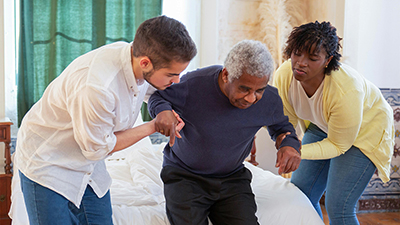
Now picture a small residential care home with 8 locals. Morning is still a busy time, however the environment is quieter and more versatile. Breakfast is typically served at a family-style table near the bedrooms, and caregivers can serve homeowners in pajamas if required, then assist them gown later. The personnel are seldom more than a room away when a resident calls. ADL support becomes a series of small, continuous interactions rather of a scramble to hit scheduled tasks.
I have actually seen locals who were identified "resistant to care" in big settings move into small homes and accept bathing and dressing help with minimal demonstration. The habits did not alter due to the fact that of a habits plan in some abstract sense. It altered due to the fact that staff had time to technique slowly, usage familiar language, adjust regimens, and develop trust.
Staff Ratios, Training, and Real-World Care
Families often request personnel ratios as if a number alone will inform the story. Numbers matter a good deal, but context determines what they in fact mean.
In a small home with 6 locals and 2 caregivers on daytime shift, each caregiver has time to fully assist 3 individuals with morning ADLs, assist with meal preparation, and still react to unscheduled needs. If one resident has a particularly hard morning, the other caregiver can cover. Locals see the very same familiar faces, which supports those with dementia or anxiety.
In a big building with 60 residents on a floor and 4 caregivers, the ratio on paper may seem similar, however the work is more segmented. One person may deal with all showers, another may pass medications, another might be responsible for 2 hallways of call lights and fundamental ADLs. Training can be standardized and in some cases more comprehensive, which is a genuine advantage. Nevertheless, when the environment is busy and task-driven, personnel may default to "get it done" rather of "do it in the method best suited to this person."
From a senior care point of view, training and guidance frequently look better on paper in large neighborhoods. There is normally a nurse on website, official in-service training, and corporate policies. Small homes differ widely. Some are exceptional, with skilled caregivers and strong nurse oversight. Others might be thin on formal training, relying more on veteran personnel who "just know" how to care for residents.
For hands-on ADLs, however, the basic concern is: does my loved one get the time, repeating, and consistency required to keep doing as much as possible for themselves, with support where required? Intimate settings tend to win on that, especially for seniors who have a mix of physical and cognitive needs.
When a Large Neighborhood May Be the Better Fit
It would be misleading to say small is constantly better for every older adult. There specify scenarios where a larger assisted living community has clear benefits, even for locals with ADL needs.
Some elders really flourish on range, social energy, and structured activities. A retired instructor or executive who still takes pleasure in lectures, getaways, and several clubs might feel confined in a small home with only a few fellow citizens. Even if they require assistance bathing and dressing, the general lifestyle may be higher in a big, active setting.
Medical intricacy is another aspect. While assisted living is not the like competent nursing, larger neighborhoods regularly have 24/7 nurse presence, on-site rehab, or close relationships with going to doctors and therapists. For a resident with regular medication modifications, breakable diabetes, or a brand-new stroke, that scientific infrastructure can be important. In those cases, you might accept some compromises on one-to-one ADL time in exchange for much better monitoring and fast response.
Cost and schedule likewise matter. In some regions, there are even more big communities than small homes, or the small homes have actually limited openings. Families in some cases utilize large neighborhoods as a form of respite care, providing a short-term break to caregivers while a loved one recuperates from an illness or while everybody evaluates longer-term choices. For a prepared brief stay, the richness of features in a larger setting might balance out the dangers of a less personalized ADL approach.
The secret is to be truthful about your loved one's priorities. If they mainly need friendship, light assistance, and delight in hectic environments, a large neighborhood can be a great fit. If they are modest, easily overwhelmed, or need regular, hands-on help with every ADL, a smaller setting typically serves them better.
The Role of Intimacy in Dementia and ADLs
Dementia complicates every ADL. It impacts memory, sequencing, spatial awareness, language, and emotional regulation. Many of the most challenging behaviors families report - refusing showers, starting out during toileting, pacing all night - emerge from stress and anxiety and confusion, not stubbornness.
In a big, unfamiliar building, somebody with dementia can feel lost numerous times a day. They might forget where the restroom is, misinterpret strangers walking down the hallway, or feel rushed by staff who are trying to keep to a schedule. That stress and anxiety appears as resistance to care. Staff may describe the person as "challenging", when in truth the environment is merely too revitalizing and impersonal.
An intimate assisted living or small memory care home reduces the distances and increases respite care predictability. Locals see the same caregivers, the very same kitchen area, the same view out the window every early morning. Caretakers can utilize constant scripts and routines: the exact same joke before showers, the exact same warm washcloth to begin face washing. Gradually, this familiarity reduces resistance and makes it possible to preserve ADLs longer, even as cognitive decrease progresses.
I keep in mind a resident who had been refusing showers in a bigger memory care unit for weeks. She clenched her fists, shouted, and attempted to hit personnel. Family were informed she "just does not like baths any longer." When she moved into a 10-bed home, the caregiver observed that she relaxed whenever someone hummed a specific hymn. They developed a pre-shower routine around that song, rerouted her to a portable shower she could see and manage, and permitted her to hold a towel across her chest. Within 2 weeks, she was bathing routinely once again. Nothing in her brain changed. The environment and the approach did.
For households navigating dementia, this is the heart of the small versus big concern. Intimacy and repeating are not simply "nice to have" qualities. They are tools that directly support ADLs.
Practical Distinctions Families Will Notice
When you tour neighborhoods, some of the most telling ideas are not in the pamphlet copy, however in the small interactions you witness. In a small home, you will often see caretakers and homeowners moving in and out of the kitchen area together, sharing small talk, and beginning ADLs organically. A resident may be helped to clean up at the sink before breakfast, with a caretaker handing them a warm cloth and assisting each step.
In a large building, ADLs are regularly set up and segmented. Showers might be "Monday, Wednesday, Friday at 10:30," and if your mother declined at 10:35, she may not get another effort until the next scheduled day. Meals are at set times, and late sleepers may get "space trays" if they miss the window, often without the very same level of social engagement or support with eating.
Noise level, lighting, and space design matter for ADL success. Small homes tend to feel locally familiar, which reduces stress and anxiety for lots of senior citizens. Intense overhead lights and long hallways can be disorienting, especially for those with poor vision or cognitive decline. In a small setting, personnel can more easily modify the environment. They might decrease the lights during evening care, play soft music during bathing times, or keep adaptive equipment within reach.
Families likewise notice how rapidly patterns are picked up. In small settings, if your father battles with buttons, someone will most likely recommend pull-over t-shirts by the 2nd or 3rd day, and you will see that shown in how they help him dress. In a large setting, the same observation may be buried amid lots of homeowners' needs, unless you or a strong supporter presses it into the written care strategy and follows up.
A Simple Comparison Checklist for ADL Support
When you tour or assess choices, it helps to have a focused lens on ADLs, not just visual appeal or activity calendars. Utilize this short checklist to compare how small and large settings might feel for your loved one:
- Ask personnel to describe a normal morning for a resident who needs help with bathing, dressing, and toileting. Listen for just how much time they allow, and whether the regular sounds rushed or versatile.
- Observe how staff address homeowners in passing. Do they utilize names, touch, and eye contact, or are they mostly job focused and in a hurry in between rooms?
- Check how far spaces are from restrooms and dining areas. Imagine your loved one making that trip 3 or 4 times a day.
- Ask how they adapt regimens for somebody who refuses or fears bathing. Search for specific, concrete examples, not unclear peace of minds.
- Inquire about personnel connection. Do the same caretakers normally care for the same homeowners, or do assignments change frequently?
You are listening less for polished answers and more for consistency, detail, and indications that staff truly understand their locals as individuals.
The Role of Respite Care in Screening Fit
One underused method for households is to deal with respite care as a trial run. Numerous assisted living neighborhoods, both big and small, deal short stays varying from a few days to a few weeks. During that time, your loved one lives in the neighborhood as a short-lived resident, getting the same senior care and elderly care services as long-lasting residents.
For ADLs, respite stays are extremely revealing. You will see how quickly personnel learn your parent's regimens, how often call lights are answered, whether clothing are put away correctly, and if hygiene and grooming appearance kept. Families sometimes find that the impressive large neighborhood struggles to manage certain behaviors or ADL jobs, while an easy small home handles them efficiently. Other times, the reverse happens, specifically if your loved one is more social and independent than you realized.
Respite care also gives your parent a voice. Even a person with moderate cognitive decrease can frequently inform you whether they feel taken care of, hurried, lonely, or safe. Pay attention to whether they talk about "individuals" by name in a small home, versus "the location" or "the building" in a larger one. That psychological connection usually associates strongly with ADL success.
Balancing Dignity, Safety, and Independence
At the heart of all these decisions is a balancing act: self-respect, safety, and independence. Small, intimate assisted living settings tend to protect self-respect and security by closely supporting ADLs and lowering the possibility of lapses. They likewise, when done well, assistance independence by providing locals just enough assist, not too much.
An excellent caretaker in a small home will understand that Mrs. Daniels can still brush her teeth separately if somebody merely sets out the toothbrush and cues her to start. In a busier environment, that very same resident might have her teeth brushed for her because personnel are pressed for time. Over weeks and months, that difference speeds up decline.
Large communities, when really well staffed and well led, can absolutely maintain strong ADL support. Some achieve this by developing small "areas" within a larger school, limiting each caregiver's area and motivating relationship-based care. Others invest in sophisticated training in dementia care strategies and employ adequate personnel to avoid persistent hurrying. These models sit closer to the "best of both worlds," but they tend to be at the higher end of the cost spectrum.
In the end, your option will hardly ever be about excellence. It will be about trade-offs. Facilities versus intimacy. Range versus predictability. On-site services versus day-to-day one-to-one time. For older grownups who need constant, hands-on aid with bathing, dressing, toileting, and mobility, smaller, more intimate settings often tip the scales, due to the fact that they convert staff hours into authentic, tailored care.
Questions to Ask Yourself Before Deciding
As you weigh options, it assists to go back from marketing language and ask yourself a couple of grounded questions about ADL support:
- Which environment will allow staff to genuinely understand my loved one's habits, fears, and choices around bathing, dressing, and toileting?
- If something fails - a fall, a rejection to shower, a bout of confusion - where are staff most likely to have time to problem-solve rather than default to crisis mode?
- Does my loved one gain more from day-to-day social variety or from predictable, familiar faces directing them through susceptible tasks?
- How much am I relying on features to make me feel better versus what my loved one actually uses and delights in?
- Could a brief respite care stay in a couple of settings help us see which environment much better supports ADLs in practice?
Clear answers to these concerns usually point strongly towards either a small or big setting as the much better very first choice.
The choice about assisted living positioning is one of the most personal in senior care. By focusing on how each environment really handles ADLs, instead of just on looks or activity calendars, you offer your loved one the best opportunity at an every day life that feels safe, considerate, and as independent as possible.
BeeHive Homes of White Rock provides assisted living care
BeeHive Homes of White Rock provides memory care services
BeeHive Homes of White Rock provides respite care services
BeeHive Homes of White Rock supports assistance with bathing and grooming
BeeHive Homes of White Rock offers private bedrooms with private bathrooms
BeeHive Homes of White Rock provides medication monitoring and documentation
BeeHive Homes of White Rock serves dietitian-approved meals
BeeHive Homes of White Rock provides housekeeping services
BeeHive Homes of White Rock provides laundry services
BeeHive Homes of White Rock offers community dining and social engagement activities
BeeHive Homes of White Rock features life enrichment activities
BeeHive Homes of White Rock supports personal care assistance during meals and daily routines
BeeHive Homes of White Rock promotes frequent physical and mental exercise opportunities
BeeHive Homes of White Rock provides a home-like residential environment
BeeHive Homes of White Rock creates customized care plans as residents’ needs change
BeeHive Homes of White Rock assesses individual resident care needs
BeeHive Homes of White Rock accepts private pay and long-term care insurance
BeeHive Homes of White Rock assists qualified veterans with Aid and Attendance benefits
BeeHive Homes of White Rock encourages meaningful resident-to-staff relationships
BeeHive Homes of White Rock delivers compassionate, attentive senior care focused on dignity and comfort
BeeHive Homes of White Rock has a phone number of (505) 591-7021
BeeHive Homes of White Rock has an address of 110 Longview Dr, Los Alamos, NM 87544
BeeHive Homes of White Rock has a website https://beehivehomes.com/locations/white-rock-2/
BeeHive Homes of White Rock has Google Maps listing https://maps.app.goo.gl/SrmLKizSj7FvYExHA
BeeHive Homes of White Rock has Facebook page https://www.facebook.com/BeeHiveWhiteRock
BeeHive Homes of White Rock has an YouTube page https://www.youtube.com/@WelcomeHomeBeeHiveHomes
BeeHive Homes of White Rock won Top Assisted Living Homes 2025
BeeHive Homes of White Rock earned Best Customer Service Award 2024
BeeHive Homes of White Rock placed 1st for Senior Living Communities 2025
People Also Ask about BeeHive Homes of White Rock
What is BeeHive Homes of White Rock Living monthly room rate?
The rate depends on the level of care that is needed (see Pricing Guide above). We do a pre-admission evaluation for each resident to determine the level of care needed. The monthly rate is based on this evaluation. There are no hidden costs or fees
Can residents stay in BeeHive Homes until the end of their life?
Usually yes. There are exceptions, such as when there are safety issues with the resident, or they need 24 hour skilled nursing services
Do we have a nurse on staff?
No, but each BeeHive Home has a consulting Nurse available 24 – 7. if nursing services are needed, a doctor can order home health to come into the home
What are BeeHive Homes’ visiting hours?
Visiting hours are adjusted to accommodate the families and the resident’s needs… just not too early or too late
Do we have couple’s rooms available?
Yes, each home has rooms designed to accommodate couples. Please ask about the availability of these rooms
Where is BeeHive Homes of White Rock located?
BeeHive Homes of White Rock is conveniently located at 110 Longview Dr, Los Alamos, NM 87544. You can easily find directions on Google Maps or call at (505) 591-7021 Monday through Sunday 9:00am to 5:00pm
How can I contact BeeHive Homes of White Rock?
You can contact BeeHive Homes of White Rock by phone at: (505) 591-7021, visit their website at https://beehivehomes.com/locations/white-rock-2/, or connect on social media via Facebook or YouTube
Ashley Pond offers flat walking paths and scenic views where residents in assisted living, memory care, senior care, elderly care, and respite care can enjoy calm outdoor relaxation.